
Finanzas personales · CUADERNO DE IDEAS
Emergency Fund: What It Is, How Much You Need, and How to Start Building One
What would happen if an unexpected expense came up tomorrow and you had no money to cover it? Learn what an emergency fund is, how much to save, and how to build one step by step, even with limited income.
LECTURA EN VOZ ALTA
Escucha este artículo
Puedes escucharlo mientras haces otras actividades. Elige una voz y ajusta la velocidad.
Preparado para escuchar.
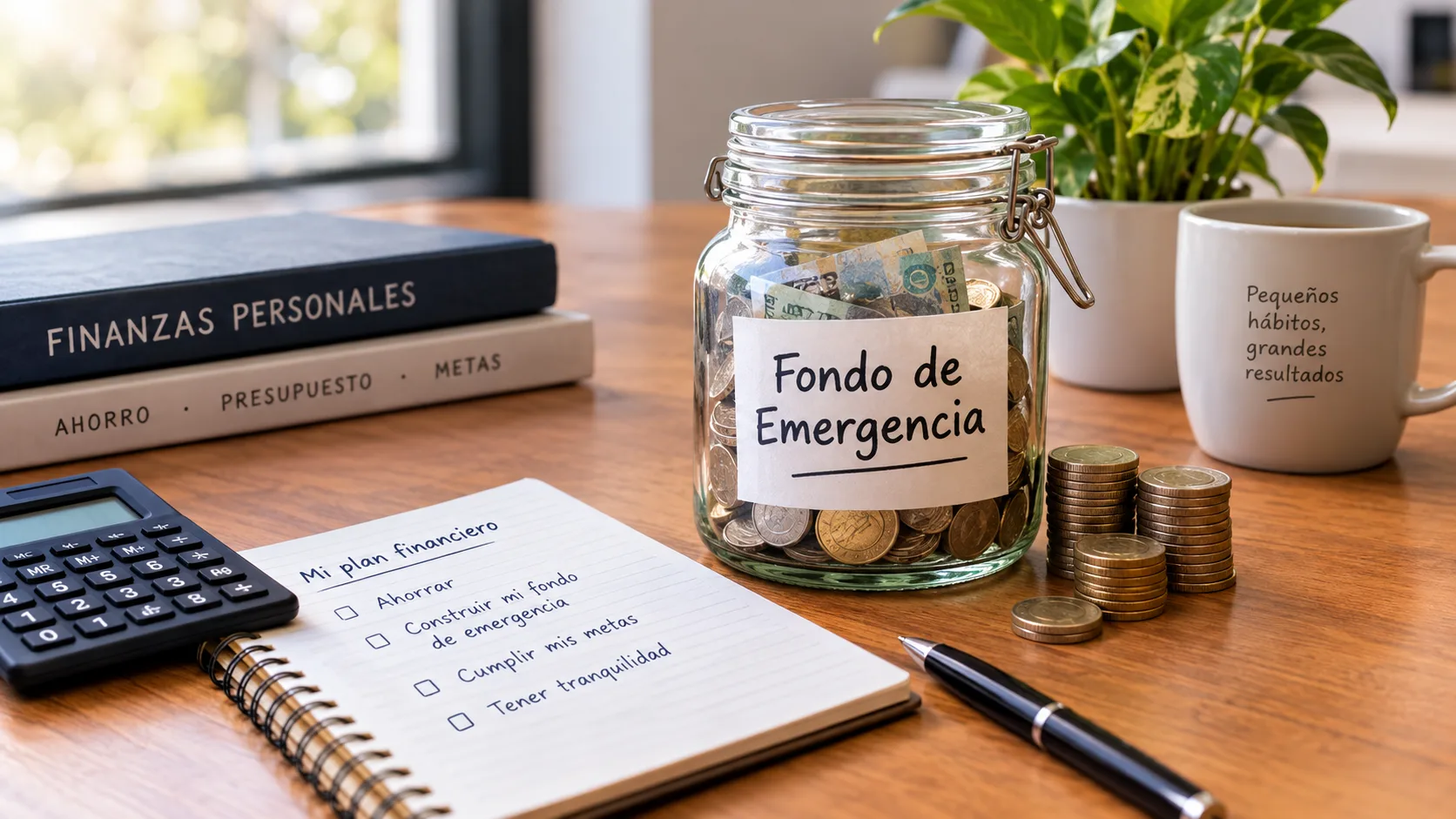
Emergency Fund: What It Is, How Much You Need, and How to Start Building One
What would happen if an unexpected expense came up tomorrow and you had no money to cover it? A car repair, a medical emergency, losing your job, or a drop in income can create difficulties even for someone who usually manages money well.
For situations like these, personal finance has an essential tool: the emergency fund.
You do not need a high salary or large savings from the first month. What matters is understanding how it works, setting a realistic goal, and building it gradually.
1. What Is an Emergency Fund?
An emergency fund is an amount of money set aside exclusively for unexpected situations that could affect your financial stability.
Its purpose is to help you respond to an unexpected event without immediately relying on loans, credit cards, or money meant for other commitments.
For example, imagine your washing machine stops working, you face an unexpected medical expense, or you temporarily lose your source of income. If you have an emergency fund, you will have financial support while you reorganize your finances.
The key is to understand that this money is not for routine purchases, vacations, or entertainment. It is a reserve for situations that truly require it.
2. Why Is It Important to Have an Emergency Fund?
Many people organize their finances by thinking only about the expenses they have each month. However, life does not always follow a budget.
Unexpected events can happen at any time, and without a financial cushion, people often turn to debt.
An emergency fund can help you:
- Avoid unnecessary debt: reduce the need to finance unexpected expenses with credit.
- Protect your budget: address an unexpected situation without immediately neglecting all your commitments.
- Reduce financial stress: having a reserve can give you more peace of mind in uncertain times.
- Protect your goals: avoid using money intended for other projects or plans.
- Give yourself time to make decisions: if you lose your income, you will have room to look for alternatives without acting in desperation.
An emergency fund does not eliminate problems, but it can keep an unexpected event from becoming a much larger financial crisis.
3. How Much Money Should You Save?
A common financial education guideline is to build a fund equal to three to six months of basic expenses.
Why use this range? It provides a reserve to cover essential needs during a period of financial difficulty.
However, there is no universal amount. Your goal depends on your responsibilities, job stability, dependents, debt level, and how quickly you could restore your income.
For example, if your basic monthly expenses are $2,000,000, you could set these goals:
You do not have to reach six months of savings right away. Even building a first reserve equal to one month of expenses can be meaningful progress.
The important thing is to start and increase the amount gradually.
4. How Do You Calculate Your Goal Based on Your Expenses?
Before deciding how much you need to save, find out how much money your household needs to operate for one month.
To do that, identify your essential expenses:
- Housing: rent or mortgage payment.
- Basic food.
- Utilities.
- Transportation.
- Health care and necessary medication.
- Education and care for dependents.
- Minimum payments on financial obligations.
At first, leave out expenses you could reduce or suspend during an emergency, such as entertainment, nonessential purchases, subscriptions, or vacations.
Then add up your essential expenses and multiply the total by the number of months you want to cover.
Practical example:
If your essential expenses are $1,800,000 per month and you want to build a three-month fund:
$1,800,000 × 3 = $5,400,000
Your first goal will be to save $5,400,000.
This calculation gives you a specific target instead of saving without knowing exactly what you are working toward.
5. How Can You Start Even With Limited Income?
One of the most common mistakes is thinking that only people with high incomes can save.
The reality is that you can start with small amounts. What matters is building the habit and staying consistent.
These strategies may help:
Set a realistic monthly amount.
Do not commit to saving an amount that you will later need to withdraw to cover regular expenses. It is better to start with a small amount you can maintain.
Set the money aside as soon as you receive your income.
If you wait until the end of the month to save whatever is left, you will probably find other expenses for that money. Treat savings as a budget category.
Reduce expenses that do not add much value.
Review subscriptions, impulse purchases, frequent food deliveries, and other expenses you could reduce without affecting essential needs.
Make use of additional income.
If you receive commissions, bonuses, freelance payments, or other extra income, you can put part of it toward strengthening your fund.
Automate your savings when possible.
A regular automatic transfer can help you stay disciplined and avoid having to decide to save each time.
Remember: how much you save in the first month matters less than being able to maintain the habit over time.
6. Where Should You Keep Your Emergency Fund?
An emergency fund should meet two basic conditions: it should be available when you need it and kept safe.
That is why it is not a good idea to treat it like money intended for long-term investments.
Some options to consider include:
- A separate savings account: keeps the money apart from everyday spending while letting you access it when necessary.
- A digital savings account: can make it easier to track the balance and separate your funds.
- Savings products with suitable access: may be an option if their terms allow you to withdraw money when you really need it.
Before choosing, review withdrawal terms, possible fees, limits, applicable deposit protection, and other features of the institution.
Avoid keeping your entire fund in volatile investments, cryptocurrencies, or products that could lock up your money during a period when you need it.
The priority for this money is not to earn the highest possible return. It is to be available in an emergency.
7. Common Mistakes When Building an Emergency Fund
Saving may seem simple, but a few mistakes can make the process harder.
Using it for expenses that are not emergencies.
A sale, a trip, or a new device should not be a reason to withdraw money from your reserve.
Trying to save too quickly.
Setting an unrealistic goal can create frustration and make you abandon the habit. It is better to make gradual progress.
Confusing savings with investing.
Money set aside for emergencies has a different purpose from capital you use to seek a return. They should not be managed by the same criteria.
Not replenishing the money after using it.
If you need to use the fund, remember that you will need to rebuild the balance afterward. Once the emergency has passed, add saving back to your budget.
Not reviewing your goal over time.
Your expenses and responsibilities may change. Review periodically whether the amount you have reserved is still enough.
8. How to Turn Saving Into a Habit
Building an emergency fund is not a race. It is a process that requires organization and consistency.
You can start with a simple plan:
- Calculate your essential monthly expenses.
- Set an initial goal equal to one month of expenses.
- Decide how much you can save without compromising your needs.
- Put that money in an account reserved exclusively for emergencies.
- Record each contribution and review your progress.
- Once you reach the first goal, continue until you have three or six months of expenses, depending on your circumstances.
For example, if your first goal is to save $2,000,000 and you can set aside $200,000 each month, you will need ten months to reach it, assuming you keep making the same contribution and do not withdraw money.
You do not need to solve your entire financial situation in one week. You need a system you can maintain.
Conclusion: Your Financial Peace of Mind Also Grows Through Saving
An emergency fund is much more than money sitting in an account. It is a tool that helps you face unexpected situations with more preparation and less dependence on debt.
It does not matter whether you start with $20,000, $50,000, or $100,000. What matters is taking the first step, setting a goal, and building the habit of setting aside part of your income.
Financial stability is not only about how much money you earn, but also about how you manage it and how prepared you are for unexpected events.
Start with what you have, move at your own pace, and build today the financial cushion you may need tomorrow.
Educational and informational content. The amounts and strategies mentioned are general examples; each person should adapt an emergency fund to their income, expenses, and personal circumstances.



CONVERSEMOS
Comentarios (0)
Comparte tu opinión o cuéntanos qué te pareció este artículo.
Todavía no hay comentarios. ¡Puedes iniciar la conversación!