
Alimentación y bienestar · CUADERNO DE IDEAS
Ultra-Processed Foods: How to Identify Them and Cut Back Without Obsessing
Not all processed foods are the same. Learn what ultra-processed foods are, how to recognize them by reading labels, and what simple changes can improve your diet without extreme restrictions.
LECTURA EN VOZ ALTA
Escucha este artículo
Puedes escucharlo mientras haces otras actividades. Elige una voz y ajusta la velocidad.
Preparado para escuchar.
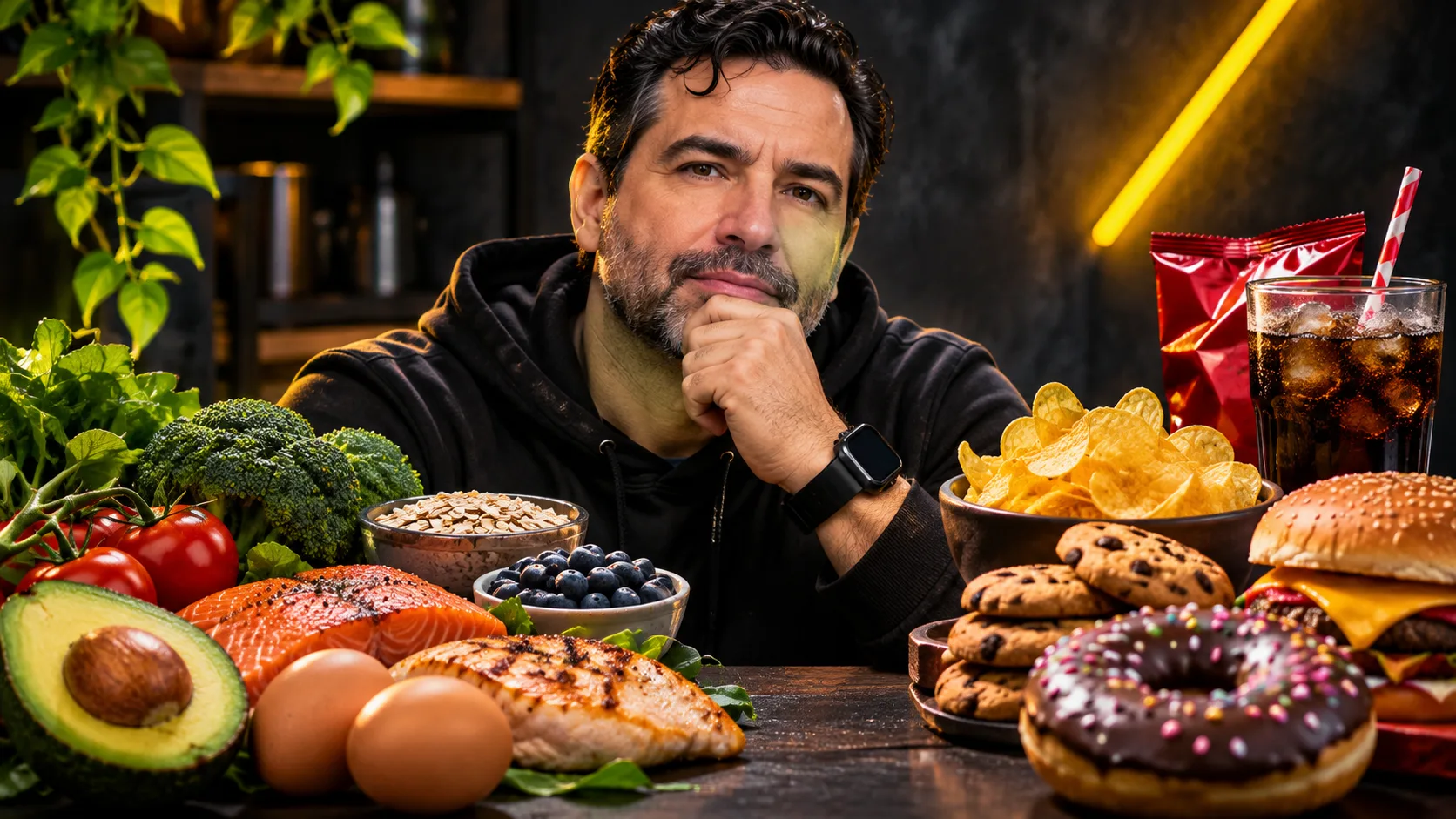
Ultra-Processed Foods: How to Identify Them and Cut Back Without Obsessing
You open the pantry and find cookies, breakfast cereal, snack bags, flavored drinks, packaged bread, and other products that seem like a normal part of everyday eating.
But have you ever stopped to think about how much of what you eat is made from natural ingredients and how much consists of industrial formulations?
In recent years, ultra-processed foods have become a major part of conversations about health and nutrition. This is no coincidence: more and more research is examining their relationship with weight gain and different health problems.
However, there is something important to understand from the start: not everything that comes in a package is harmful, and not all processed foods are the same.
The idea is not to inspect every ingredient with a magnifying glass, but to learn what we buy and make more thoughtful choices.
What Are Ultra-Processed Foods?
The term ultra-processed is used for products made through industrial formulations that often combine ingredients extracted from foods, modified substances, and additives we do not normally use in home cooking.
The NOVA classification system, used in food research, organizes foods into four groups according to their processing and formulation.
We can understand them this way:
1. Natural or minimally processed foods
These foods retain their original characteristics or have gone through simple processes such as washing, cutting, freezing, drying, or pasteurization.
Examples include:
- Fresh fruits and vegetables.
- Eggs.
- Fresh fish and meat.
- Rice, oats, and legumes.
- Frozen vegetables with no added ingredients.
2. Processed culinary ingredients
These are products we usually use to prepare other foods.
For example:
- Oil.
- Salt.
- Sugar.
- Butter.
3. Processed foods
These are foods to which salt, sugar, oil, or other ingredients have been added to preserve them or change their flavor.
This group includes products such as some cheeses, fresh breads, and canned vegetables or fish.
4. Ultra-processed foods
These are industrial formulations that often contain combinations of ingredients and additives used to change the flavor, texture, color, shelf life, or presentation of a product.
Common examples include:
- Sodas and sugary drinks.
- Packaged industrial snacks.
- Cookies and industrial baked goods.
- Highly sweetened breakfast cereals.
- Industrial candies and sweets.
- Some ready-to-heat meals.
- Certain reconstituted meat products.
This classification is a tool for understanding what we eat, not an automatic verdict on every product. Classification can depend on the specific formulation.
How Can You Recognize an Ultra-Processed Food?
You do not need to be a nutritionist to start noticing some signs. One of the most useful habits is learning to read the ingredient list.
1. Check how many ingredients it contains
A long list may be a sign that you are looking at a complex industrial formulation. However, the number of ingredients alone does not determine whether a food is healthy.
What matters is looking at what the ingredients are and why they are used.
2. Look for ingredients you would not normally use at home
Some terms you may find include:
- Maltodextrin.
- Modified starches.
- Protein isolates.
- Emulsifiers.
- Stabilizers.
- Flavor enhancers.
- Flavorings and colorings.
Their presence may help you recognize an industrial formulation. It does not mean every additive is harmful on its own or that its presence automatically makes any food a bad choice.
3. Check sugar, sodium, and saturated fat
It is not enough for a product to be marketed as light, natural, fitness-oriented, or enriched with vitamins.
Review the nutrition facts and pay attention to the amount of added sugars, sodium, and saturated fat.
Two products that look similar may have very different nutritional compositions.
Why Is Their Consumption a Concern?
The concern is not limited to some products containing too much sugar, salt, or fat. Researchers also want to understand how certain formulations may influence the way we eat.
A controlled study by researchers at the United States National Institutes of Health (NIH), published in 2019, compared two types of diets over one month in 20 adults.
Participants received an ultra-processed diet for two weeks and a minimally processed diet for another two weeks.
Although the meals provided had similar amounts of calories and nutrients, participants consumed about 500 additional calories per day during the ultra-processed diet phase. They also gained weight during that period.
The study is interesting because it was a controlled trial, but its results should be interpreted carefully: only 20 people participated, and it does not establish that all ultra-processed products have the same effect.
A review published in The BMJ in 2024 found associations between greater exposure to ultra-processed foods and different unfavorable health outcomes. However, much of the available research is observational, so an association alone does not prove that a specific food caused a disease.
What is reasonable is to pay attention to how often these products take the place of more nutritious foods in our diets.
Does This Mean You Should Stop Eating All Processed Foods?
No. This is worth pausing to consider.
Food processing also has benefits. Pasteurization helps make milk safer, freezing preserves food, and canned foods can make nutritious products available for longer.
For example, keeping frozen vegetables, canned legumes, or canned fish at home can be quite practical when you do not have time to cook.
We should not assume that all packaged breads, yogurts, or fortified products have the same nutritional quality. Their composition depends on each product.
The goal should not be to indiscriminately eliminate everything that comes in a package, but to build a diet in which natural or minimally processed foods play a leading role.
Five Simple Changes to Improve Your Diet
You do not need to transform your entire pantry overnight. You can start with small changes that are easy to maintain.
1. Replace some sugary drinks with water
If you often drink sodas, flavored drinks, or industrial juices, start by reducing some of those occasions. Water can become your usual drink.
2. Make more room for natural foods
Include fruits, vegetables, eggs, legumes, oats, and other simple options in your meals.
You do not need complicated recipes: a combination of basic foods can be enough to build a nutritious meal.
3. Prepare some foods ahead of time
Cooking extra rice, lentils, beans, chicken, or vegetables can make meals easier over the next few days.
When you have prepared options, it becomes easier not to rely on ready-to-eat products all the time.
4. Compare products before buying
When you have two similar products, review their ingredients and compare the amount of sugar, sodium, and saturated fat.
Do not rely only on the words printed on the front of the package.
5. Do not turn eating into an obsession
A healthy diet does not require perfection. There will be times when you eat ultra-processed foods, and that does not mean you have ruined your habits.
Frequency, amounts, and the overall pattern of your diet matter much more than one isolated choice.
A More Thoughtful Diet Starts With Small Decisions
Ultra-processed foods are part of today’s food environment. They are practical, accessible, and often designed to be appealing.
That is why the first step is not necessarily to ban them, but to learn to recognize them and keep them from constantly displacing other, more nutritious options.
You can start by reviewing what you have at home, comparing a couple of products on your next shopping trip, or adding another fruit, vegetable, or home-cooked dish to your routine.
You do not have to do everything today.
Eating better is not about pursuing a perfect diet, but building habits you can maintain over the long term.
And often, that change begins with something as simple as taking a few seconds to read a label.
This article is for informational purposes and does not replace guidance from a nutrition or health professional. Dietary needs can vary depending on each person’s condition and circumstances.


CONVERSEMOS
Comentarios (0)
Comparte tu opinión o cuéntanos qué te pareció este artículo.
Todavía no hay comentarios. ¡Puedes iniciar la conversación!